
Minimalist Living
A Tool for Navigating the Cost of Living Crisis

Here in the UK, we’ve faced numerous challenges over the past few years. One of the central issues dominating headlines is the cost of living crisis, which doesn’t seem to be easing. Many people feel helpless, after all, we can’t directly control inflation, tax increases, or global events such as wars that affect energy and food prices.
So, what can we control? Ourselves.
We can control how we live, how we think, and how we spend our money.
In recent years, I’ve become increasingly mindful about lifestyle philosophies and how they can help us live more intentionally. I believe these philosophies are practical tools we can use to navigate modern life.
One of the most helpful tools, in my experience, is minimalism. Which is a way of living that focuses on what we truly need, promotes what we value, and removes what we don’t. Its guiding principle is simple: “less is more.”
How Can Minimalism Help During a Cost of Living Crisis?
Essentials vs. Non-Essentials
It starts with understanding the difference between needs and wants, or essentials and non-essentials. This can be challenging because we’re constantly surrounded by advertising designed to make us feel like we’re lacking something. We’re not only up against clever marketing but also our own human impulses, which marketers skillfully exploit.
To resist this, we can ask ourselves a few key questions before making a purchase:
Is it a genuine need — an essential?
Will it add real value to my or my family’s life?
Do I truly want it, or have I fallen for clever marketing?
Does it “spark joy,” as Marie Kondo would say?
Could I live without it?
Will it make a meaningful difference to my life?
By thinking critically about what we buy and why, we become more conscious of our choices and start spending intentionally rather than impulsively.
Less Is Truly More
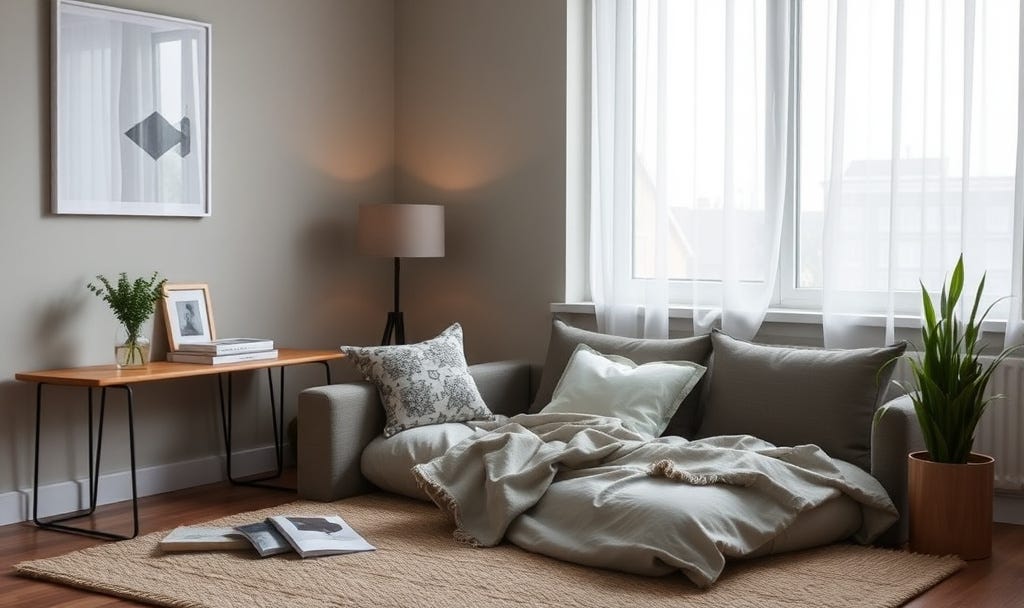
A minimalist home is one where clutter is kept to a minimum. If your house is full of items you never use or need, you’re likely living in a cluttered space. Decluttering can even provide short-term financial relief if you sell unwanted items, with plenty of online platforms that make this easy.
Alternatively, you could donate items to local charities or community groups, supporting those in need.
You won't always make money from decluttering, but there are additional benefits:
Less maintenance and repair — fewer items mean fewer things to fix or replace, saving you time and money.
Less cleaning — less clutter means less dust, and cleaning becomes faster and easier.
The time you save could be spent with family, working on a side project, relaxing, or cooking fresh meals, which often reduces your food bills.
You may even find that by embracing minimalism, you don’t need as large a home, allowing you to downsize and reduce your expenses further. Lower rent or mortgage, cheaper council tax and lower heating bills. Some even take this idea further with tiny homes, but that’s another topic.
Simplify Your Subscriptions
Clutter isn’t just physical, it’s digital and financial too. Subscriptions from gym memberships to streaming services, can pile up quietly and drain your finances.
A few small monthly fees, £5.99 here and £8.99 there, can easily add up to over £100 per month.
Keeping your subscriptions lean not only simplifies your life and budgeting, but also saves real money.
Ask yourself:
Do I need all these streaming services?
Am I paying for things I rarely use?
Many people justify multiple streaming subscriptions because each has its exclusives, worrying that they’ll miss the variety. But it’s okay to miss out. Most of the time, those must-watch shows, aren’t life-changing, and you may discover you value your time and attention more.
If you really want to see a particular show, pay for one month, watch it, and then cancel. My family have narrowed it down to the two services we genuinely use and enjoy.
As for gym memberships, think about how you truly enjoy exercising. If all you do is run on the treadmill, consider running outside instead, it’s free and you get the benefits of nature. Maybe invest in a few weights for home workouts, or focus on bodyweight exercises. Don’t pay for a gym you don’t use, use it or lose it.
At home, my wife and I realised the television was becoming a distraction. We spent ages scrolling for something to watch, often rewatching shows that didn’t bring us any value. Now, more often we play ambience on YouTube and read instead. Evenings feel more peaceful, meaningful, and intentional as a result.
In Summary
For some, minimalism is a complete lifestyle, a philosophy they fully commit to. For others, it’s simply a tool to live more intentional.
However you approach it, the essence of minimalism is simplicity and intentionality. It can help you align your life with your values, reduce unnecessary spending, and create mental space, all of which make it a valuable philosophy during economic hardship, such as the ongoing cost of living crisis.