
Minimalist Myths

There are a number of myths and misunderstandings surrounding the term minimalism, but on top of that there are also those who I believe unintentionally act like gatekeepers. These people have encouraged myths that make this philosophy seem unreachable or too radical, as if it’s some kind of exclusive club that you can only join if you meet a certain criteria.
Do you own less than 100 items? Do you have a capsule wardrobe with dark colours only? Did you spend less than xx amount on that item? Are all your walls stark white? Followed with a test along the lines of whether you could fit all your possessions in a suitcase…
I am using satire here, the gatekeepers don’t actually put it that way, but you get my point. So what are these myths that commonly get paired with the idea of minimalism?
Myth 1 - Owning as little as possible
This misconception turns minimalism into a numbers game, and whoever has the lowest number of items wins. This misses the point of minimalism and makes it a one size fits all, which simply doesn’t work. We shouldn't be focusing on an arbitrary number of items we own, rather it should be about the items we own adding value and joy to our lives, serving us rather than us serving the item.
An individual who has 300 intentionally selected items that add value and bring joy, is more aligned with the philosophy of minimalism than someone who is aiming for a random number for the sake of it. That isn’t minimalism, that’s a trend.
A digital nomad will naturally own far less because they are traveling, compared to a couple living in a tiny house who will own more items. Then there are families who will own more and live in a bigger space because they have kids. All three can be minimalists and it is practised in different ways with the number of items being different due to circumstances.
Myth 2 - Minimalism is cheap
Greg McKeown in his book ‘Essentialism’ talks about the pursuit of less but better, and that phrase demonstrates that minimalism isn’t about being or buying cheap. It’s the opposite; quality is far more important than quantity. If we use t-shirts as an example, instead of buying a number of cheap t-shirts on a regular basis, invest in a handful of quality T-shirts that last for a number of years. Instead of buying the cheap laptop that will slow down and need replacing in two years, spend more and buy one that will last 5-6 years.
True minimalism is about value and longevity, which means investing more upfront in fewer, better things. Minimalism can be and often is luxurious, rather than being cheap.

Myth 3 - Dull & without colour
I will be honest, I rather like the all-white walls and grey pieces, but I despise the idea of wearing nothing but dark colours (mainly black and charcoal) because I want a variety of colour and light in my life.
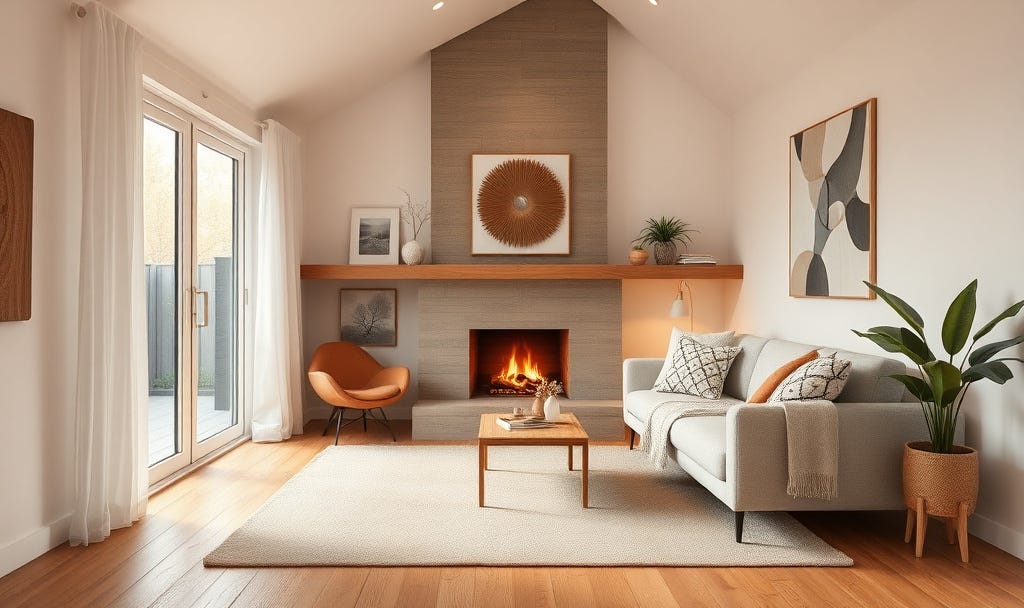
Sadly, minimalism has been blended with certain aesthetics, such as wearing black all the time, which was made popular by The Minimalists. The white walls and instagram-perfect empty rooms are not reality. Scandinavia, like Japan, is known for minimalism, and it also embraces concepts such as Lagom (balance) and Hyggue, which refers to warmth and cosiness. This is why Scandinavian minimalism has a warmer and comfier feel to it as it also embraces Hyggue. Japan, with its culture of kawaii (cute, tiny) and concepts like wabi sabi (beauty in imperfection), also has an impact on its application of minimalism, and I have seen many images online of minimalist design and aesthetics that have soft colours and character as a result.
I am not saying that those who do wear all black and have white walls are not minimalists, I am just saying that’s not what makes you a minimalist. Minimalism is about removing what doesn’t serve you, not removing joy, personality, or colour from your life.
Myth 4 - It’s all about physical decluttering
This places a limit on minimalism and turns it into nothing more than a physical decluttering tool or method, whilst in reality it extends further than just the physical clutter in your home. Digital clutter is becoming more common, from thousands of photos and apps to a multitude of unread emails that are creating chaos. Then there is mental clutter, not being able to say no which leads to too many commitments, being over worked, allowing toxic people to stay in your life and influence you, and being distracted all the time.
A deeper understanding of minimalism shows it’s about being intentional with choices, ensuring that our choices line up with our values and creating space in all areas of our lives. It’s decluttering the calendar, reducing decision fatigue by establishing routines and reducing the mental stress of managing things that don’t add value.
Having a tidy home but a mind that is overwhelmed, a schedule that has you overcommitted and a phone that is distracting you, isn’t embracing minimalism. You just have a tidy home.

Myth 5 - It’s for people without kids
This one collapses once you realise that minimalism isn’t just about physical decluttering and owning as few items as possible. With children life gets more complicated, requires more control and managing, which is why I have placed a greater emphasis on minimalism as a parent.
With more stuff in the house it becomes important to stay on top of the physical clutter with regular decluttering and organising. They grow out of clothes quickly, and break, outgrow or get bored of toys, make a mess (so much mess), have appointments, commitments and everything becomes a safety hazard.
Minimalism provides a framework for focusing on what matters and serves the family, while saying no to what doesn’t. It helps by ensuring we keep toys that add value and they actually play with, adopting a frugal mentality with clothes as they outgrow them and donating them once finished with. Managing what comes into the house is essential so we are intentional with purchases. We try and create systems that reduce chaos, simplify routines, meals and cleaning, which becomes easier with less stuff in the home, freeing up more time and reducing stress. This is time that can be spent on what we value, such as quality time together, financial freedom and a less chaotic home.
I think it’s also important to teach children about minimalism and intentional living from a young age, helping them understand the difference between wanting something and needing it. In a world of many problems, from consumerism to mental health, it’s becoming more important than ever. It’s not only a great philosophy to embrace as a family but also to pass onto your children.
Takeaway
There are more myths and misunderstandings surrounding minimalism than what I have discussed here, most of them being rooted in what some may call extreme branches of minimalism or influencers.
Minimalism is a modern term for a modern movement, yet the ideas and concepts of minimalism are not new but can be found across many schools of thought and cultures. To an extent it’s still a baby and therefore developing, which is important to keep in mind.
I do think we need to dig deeper in understanding minimalism, which is the place myths tend to disappear.