
The Vision Board
A Tool, Not a Magic Trick

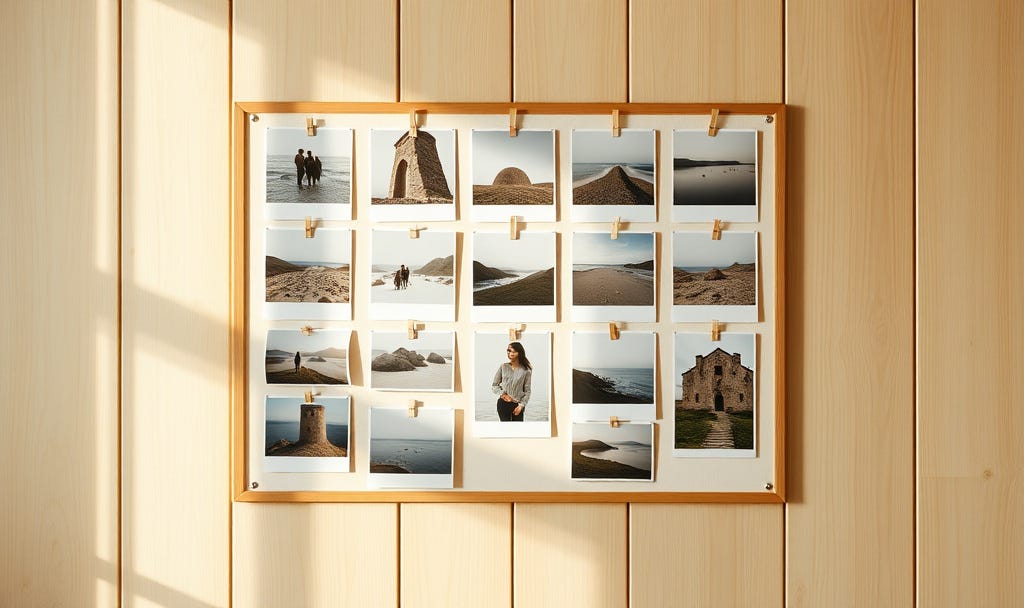
I’ll be honest, I thought vision boards were nonsense, and I’m probably not alone in thinking that because there is something about the concept that makes practical people with a bias to action roll their eyes. It sounds like wishful thinking dressed up as productivity, you’re supposed to stare at a collage of dream holidays and sports cars until the universe delivers them to your door. For someone trying to build a bias towards action, it felt like the opposite of useful.
Then, out of curiosity, I made one anyway.
Now, I look at it every day for less than a minute, but that one minute reminds me of my goals, my why, and the direction I’m heading. On the days when everything feels busy and chaotic, with work, study, kids, and building something on the side, that reminder matters more than I expected.
What I realised is that I was confusing the tool with how others may choose to use that tool.
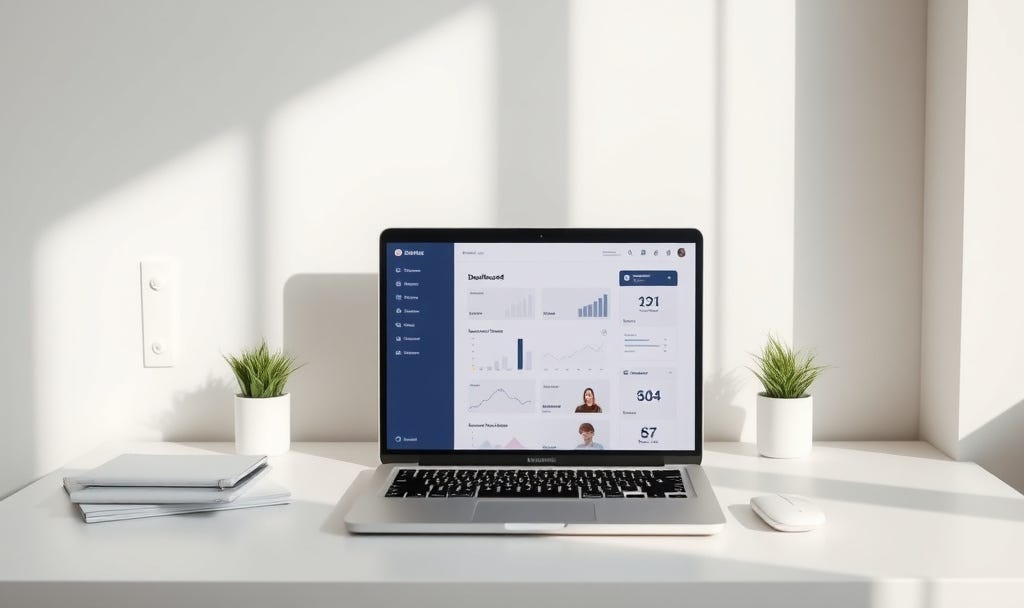
So what actually is a vision board?
In accountancy most software comes with a visual dashboard, which takes complex data and presents it in a simple, visual format that’s fast to read and easy to understand. That’s what a vision board does for your life, it takes your thoughts, ambitions, and goals and puts them somewhere your brain can process quickly.
Instead of scrolling through notes or trying to remember what you’re working towards, you glance at a board and your mind gets it instantly.
Why does it actually work?
Without going too deep into the science, Carl Jung explored the idea that a significant amount of what drives our behaviour happens beneath conscious awareness, in the subconscious mind. A vision board works with that, providing regular exposure to images representing your goals quietly to reinforce what matters to you, beneath the surface.
There’s also something called the reticular activating system, the part of your brain that filters the world, deciding what to notice and what to ignore. You've probably experienced this without realising it. Think about the last time you considered buying a specific car in a certain colour, then suddenly you start seeing them everywhere. On the motorway, in car parks, even on your street, they were always there but you just hadn’t noticed before. The reason being is that your brain has just started treating that car as relevant. Consistently look at something and you’re essentially telling your brain to treat it as important, opportunities, ideas, and connections that were always there start to surface. It isn’t mysticism, it’s just how the brain works.
Daily repetition is the point here, not hours of visualisation but brief, consistent exposure.
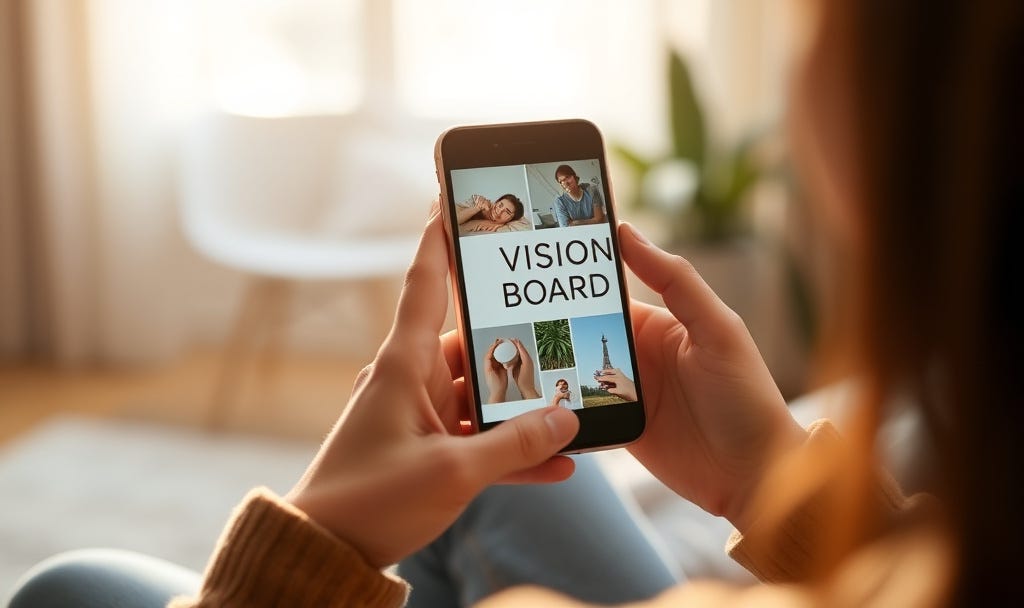
What about the criticism?
From my experience the pushback usually comes from two directions, and honestly, both have a point. The first is from sceptics who see it as pure fantasy, passive wishing with no grounding in reality. The second is procrastination, some people make the board, feel good about it, and stop there, with the board becoming a substitute for action rather than a prompt for it.
I think both criticisms are pointing at the same misunderstanding, confusing the navigation system for the engine.
Think about an aircraft, the engine provides the power and without it the aircraft can’t take off and fly. But power without direction is just noise, which bystanders like myself enjoy, not so much if you actually want to go somewhere. The navigation system is what takes that power and guides it somewhere meaningful. A vision board is a little bit like the navigation system, it doesn’t replace action as you're still doing the work, it simply directs it. The reality is that you need both.

How to use one (Assuming you know your goals)
Keep it simple, gather images digitally or print a few out that you can relate to your goals, ambitions and aspirations, organising them onto a board. Put it somewhere you’ll actually see it with ease on a daily basis, like your desk, your wall, screensaver of devices, then look at it every day, even just for a minute.
That’s genuinely it.
Don’t aim for perfection, a rough board you look at daily beats a beautifully curated one you never finish. Start with what resonates, keep it visible, and refine it as your thinking gets clearer. Mine isn’t perfect and it doesn’t need to be, it just needs to do its job.
What would you put on yours?
Subscribe to Purpose & Simplicity
Each week we send out a newsletter on intentional living, lifestyle design, lifestyle business, simplicity and the freedom that follows.
Subscribe so you never miss an issue.
Share with friends & family
If you enjoyed this newsletter and know someone who would find it valuable and helpful, feel free to share with them.
1:1 Life Coaching
Wanting to change your life but lack clarity and not sure where to start?
The direction call is a relaxed, no pressure conversation to help you find your direction.

I really enjoyed this, James.
I’ll admit I’ve probably leaned toward the skeptic camp on vision boards, but your framing made a lot of sense to me.
I especially liked the distinction between the navigation system and the engine. That feels like the real value. Not replacing action, but keeping what matters visible enough to influence where our energy goes.
There’s something clarifying about regularly reconnecting with the direction we’re intentionally building toward.
I love how creativity can help us share to ourselves what is important :)